
Clinical Philosophy
How We Think About
Spine Care
The intellectual foundation of the Canadian Spine Institute—where clinical judgment and evidence guide every decision.
Complexity Requires Careful Thinking
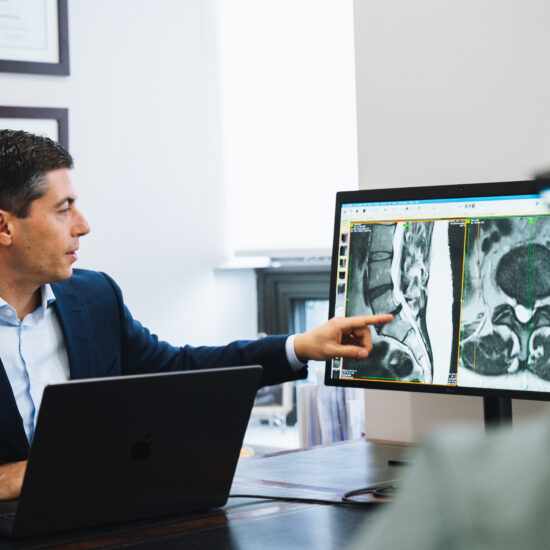
Spine problems are among the most common reasons patients seek medical care—and among the most misunderstood.
The relationship between imaging findings, symptoms, and functional impairment is not straightforward. A patient with severe degenerative changes on MRI may have minimal symptoms. Another with minor imaging findings may be significantly disabled.
Imaging does not equal pain. Pain does not equal pathology. And pathology does not always require intervention.
This variability makes spine care inherently complex. It requires careful evaluation, diagnostic precision, and clinical judgment that cannot be replaced by algorithms, pattern recognition, or procedural volume.
At CSI, we do not rush to treatment. We begin with understanding.
The Most Important Decision Happens First

The quality of spine care is determined in the first encounter—not in the operating room.
Accurate diagnosis requires:
- A thorough clinical history to understand the onset, nature, and progression of symptoms
- A detailed physical examination to identify neurological deficits, functional limitations, and pain patterns
- Critical review of imaging to correlate findings with clinical presentation
Triage is equally critical:
Not all patients require treatment. Not all patients who require treatment require surgery. And not all patients who might benefit from surgery should have it.
Misdiagnosis leads to failed treatment. Inappropriate triage leads to unnecessary procedures, prolonged disability, and poor outcomes.
At CSI, we prioritize getting the diagnosis right—even when that means taking more time, ordering additional studies, or recommending observation instead of intervention.
Most Patients Do Not Need Surgery
The majority of spinal conditions improve with conservative management. This is not a philosophical preference—it is a clinical reality supported by decades of evidence.
Conservative care pathways may include:
- Spine-specialized rehabilitation to address movement patterns, strength deficits, and functional limitations
- Activity modification to reduce symptom provocation while maintaining mobility
- Education to help patients understand their condition and set realistic expectations
- Symptom management when appropriate to support function during recovery
Conservative care is not a delay tactic. It is often the most appropriate treatment.
When patients improve with non-operative management, they avoid surgical risk, preserve anatomy, and often develop better long-term movement strategies than those who proceed directly to surgery.
When patients do not improve, we have established an objective baseline that helps determine whether surgery is the appropriate next step—and what type of surgery is most likely to succeed.
At CSI, conservative care is not a checkbox. It is a foundational component of clinical decision-making.
Surgical Capability Guided by Restraint

Surgery is a powerful intervention. When used appropriately, it can relieve suffering, restore function, and improve quality of life. When used inappropriately, it creates complications, disappointment, and long-term disability.
At CSI, surgery is considered only when:
- Conservative management has been exhausted or is clearly inappropriate
- There is objective evidence of structural pathology that correlates with symptoms
- The patient understands the risks, benefits, and realistic expectations
- The surgical plan addresses the underlying problem with the least invasive approach possible
We do not perform surgery because it is requested, convenient, or profitable. We perform surgery when it is clinically indicated.
This requires judgment—the ability to distinguish between patients who will benefit from surgery and those who will not. That judgment cannot be automated, outsourced, or replaced by volume-based incentives.
When surgery is appropriate, CSI delivers advanced minimally invasive and motion-preserving techniques including spinal endoscopy, cervical disc replacement, and minimally invasive decompression and fusion.
But technique without judgment is dangerous. The most important surgical decision is whether to operate at all.
We Do Not Measure Success by the Number of Surgeries Performed
Surgical volume is often used as a proxy for expertise. It is not.
High surgical volume without appropriate patient selection leads to:
- Procedures performed on patients who would have improved without surgery
- Operations that address imaging findings rather than clinical symptoms
- Short-sighted results at the cost of long-term outcomes
At CSI, we measure success differently:
- Did we correctly identify which patients required surgery—and which did not?
- Did we choose the least invasive approach that addressed the underlying problem?
- Did the patient's functional outcome justify the surgical risk?
- Would we make the same decision again?
Precision matters more than frequency. Appropriateness matters more than volume.
This approach may result in fewer surgeries than a practice optimized for procedural throughput. That is intentional.
Preserving Anatomy and Function
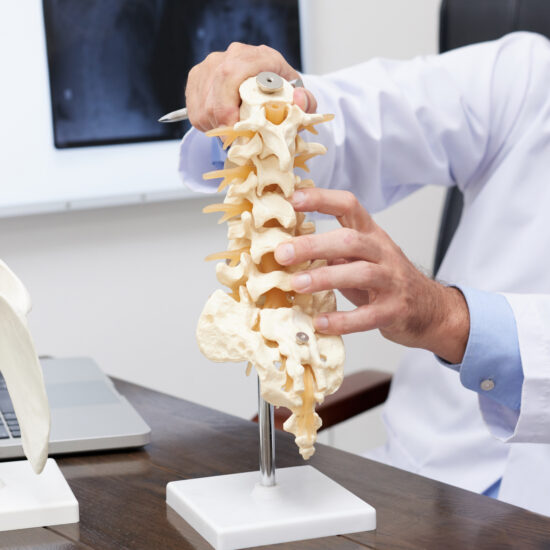
The spine is a dynamic structure. Motion is essential to normal function. When surgery is necessary, preserving spinal anatomy and motion—when appropriate—improves long-term outcomes.
CSI's approach emphasizes:
- Endoscopic techniques that decompress neural structures while preserving bone, ligament, and muscle
- Cervical disc replacement to maintain motion at the treated level when fusion is not required
- Minimally invasive approaches that reduce tissue trauma and preserve stability
Motion preservation is not appropriate for every patient. When instability, deformity, or multi-level disease is present, traditional techniques and fusion may be the better option.
The goal is to choose the most appropriate technique based on the patient's pathology, not on marketing trends or procedural preference.
Responsibility for Decisions and Outcomes
Spine surgery carries risk. Not all patients improve. Not all complications are preventable. But surgeons are responsible for the decisions they make—and accountable for the outcomes that follow.
At CSI, accountability means:
- Tracking outcomes prospectively to evaluate the effectiveness of our treatments
- Questioning our decisions when results do not meet expectations
- Remaining engaged with patients throughout recovery—not disappearing after the procedure
- Contributing to research to advance the field and improve care
We do not guarantee outcomes. Spine care involves complexity, uncertainty, and individual variability that cannot be eliminated.
But we commit to:
- Making decisions based on evidence and clinical judgment
- Communicating honestly about risks, benefits, and realistic expectations
- Taking responsibility for the care we provide
- Learning from both successes and failures
This is what defines professional accountability. This is what distinguishes CSI.
The Goal Is Not Short-Term Relief — It Is Long-Term Function

Many spine interventions produce short-term symptom improvement. Fewer produce sustained functional recovery.
The goal of spine care is not to eliminate pain temporarily—it is to restore function, prevent recurrence, and support long-term spine health.
This requires:
- Addressing the underlying problem, not just the symptom
- Integrating rehabilitation into surgical planning
- Setting realistic expectations about recovery timelines
- Tracking outcomes beyond the immediate post-operative period
At CSI, we do not measure success at six weeks. We measure it at six months, one year, and beyond.
Long-term outcomes require long-term thinking—and long-term responsibility.
A Different Approach to Spine Care
If you are seeking comprehensive evaluation, honest communication, and clinical judgment guided by evidence—we welcome the opportunity to help.
This approach is not designed to maximize throughput. It is designed to deliver the highest quality care to the patients who need it.
If you are seeking comprehensive evaluation, honest communication, and clinical judgment guided by evidence—we welcome the opportunity to help.