
Spinal endoscopy
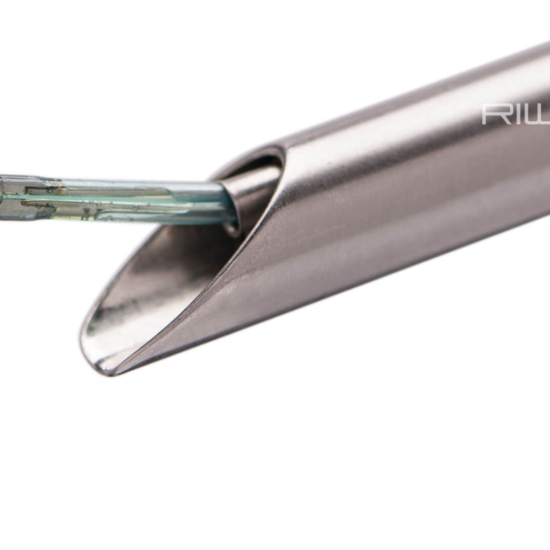 Spinal endoscopy is a minimally invasive surgical technique that allows access to the spine through very small incisions using a camera and specialized instruments.
Unlike traditional open surgery, which requires greater exposure of tissues, endoscopic techniques are designed to target the source of the problem while minimizing disruption to surrounding structures such as muscles, ligaments, and bone.
A Tool, Not a Procedure
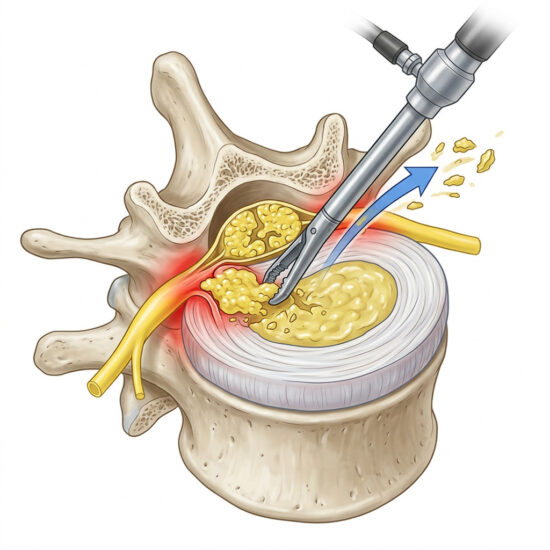 Spinal endoscopy is not a single procedure, but rather a method of accessing the spine. It can be used in different situations, including the treatment of disc herniations, spinal stenosis, and certain types of nerve compression.
Endoscopic techniques are primarily designed to remove or treat tissue that is compressing a nerve. In some cases, small disc fragments or other offending structures can be selectively removed to relieve symptoms while preserving the surrounding anatomy.
Advantages of Endoscopic Techniques
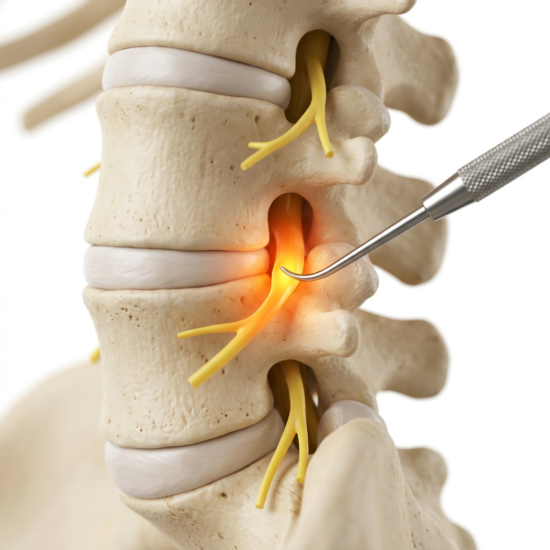 Endoscopic surgery is designed to:
Minimize tissue disruption
Reduce postoperative pain
Shorten recovery time
Allow faster return to normal activities
In many cases, these procedures can be performed on an outpatient basis.
Limitations and Proper Indications
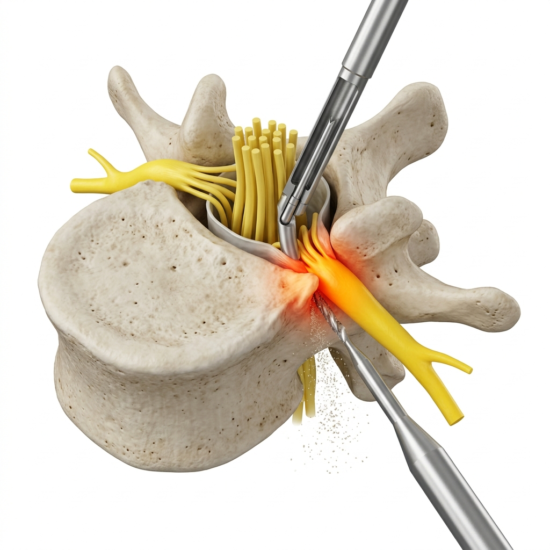 While endoscopic techniques offer important advantages, they are not appropriate for all conditions.
In some cases, the underlying pathology cannot be adequately treated through an endoscopic approach. This may be due to anatomical limitations, involvement of multiple levels, or when several nerve structures are affected.
Additionally, some conditions require more than just decompression. When the underlying tissues have lost structural integrity, additional support—such as an implant or fusion—may be necessary to achieve a durable result.
Our Approach
 We use spinal endoscopy when it allows us to effectively treat the problem with the least disruption to normal anatomy.
However, the priority is always to select the approach that provides the best long-term outcome—not simply the least invasive option.
Minimally Invasive Spine Surgery
Minimally invasive spine surgery (MIS) refers to a general surgical philosophy aimed at treating spinal conditions while limiting disruption to surrounding tissues.
This approach focuses on preserving muscles, ligaments, and normal anatomy whenever possible. By reducing tissue injury, MIS techniques are associated with less blood loss, reduced postoperative pain, lower reliance on opioids, and a faster potential return to normal activities.
A Principle, Not Just a Technique
Minimally invasive surgery is not defined by a single tool or procedure, but by an overall approach to care.
It includes a range of techniques—such as endoscopic surgery, microscopic tubular surgery, and other targeted approaches—that are selected based on the specific condition being treated. The goal is to address the underlying problem while minimizing the physiological impact of surgery.
Balancing Invasiveness and Effectiveness
While less invasive approaches are preferred, they must also provide a durable and effective solution.
In some cases, a smaller, targeted intervention is sufficient to relieve symptoms. In others, a more extensive procedure may be required to adequately address the underlying pathology.
The choice of technique depends on the nature of the condition, the structures involved, and the overall stability of the spine.
Our Approach
We prioritize minimally invasive techniques whenever they can effectively treat the condition and provide lasting benefit.
However, the least invasive option is not always the best option. The focus is on selecting the approach that offers the best balance between minimizing tissue disruption and achieving a reliable, long-term outcome.